





















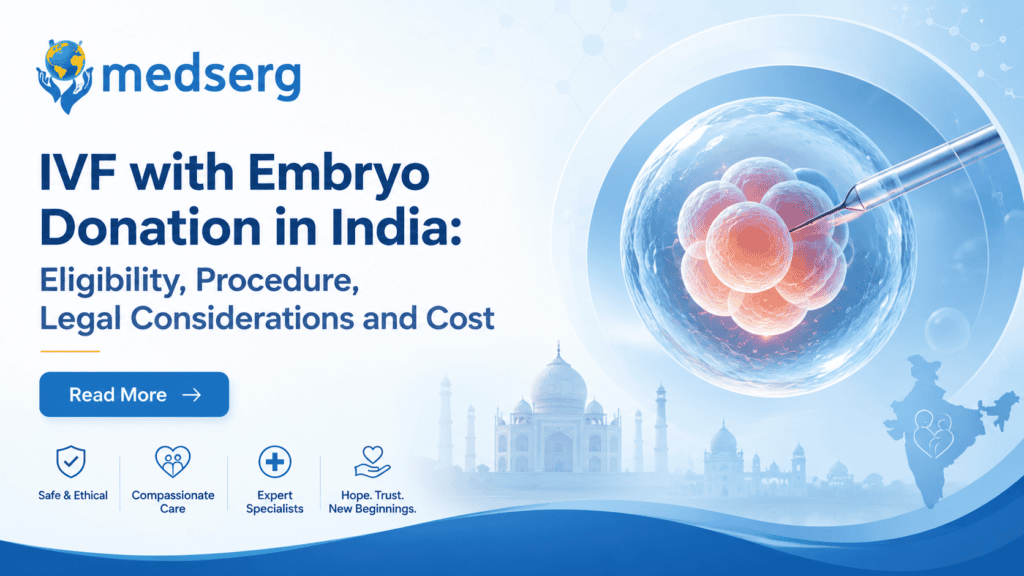
VF with embryo donation may be considered when pregnancy is unlikely using the intended parents’ own eggs and sperm. The treatment involves transferring an embryo created using donor reproductive material into the recipient woman’s uterus.
In IVF Treatment in India, the terminology and legal structure surrounding embryo donation require careful attention. Surplus embryos belonging to one couple cannot automatically be donated to another patient. Depending on medical eligibility and applicable regulations, a fertility clinic may instead recommend IVF using a screened donor egg and donor sperm. Patients should therefore obtain written clarification about the source of the embryo and the treatment permitted under Indian ART regulations.
Who May Be Eligible?
A fertility specialist may recommend donor-assisted IVF in the following situations:
| Medical condition or situation | Why treatment may be considered |
|---|---|
| Premature ovarian failure | The ovaries no longer produce suitable eggs |
| Severely reduced ovarian reserve | An adequate number of healthy eggs cannot be retrieved |
| Severe male infertility | Viable sperm is unavailable |
| Infertility affecting both partners | Both egg and sperm factors prevent embryo creation |
| Repeated IVF failure | Previous IVF cycles failed to produce viable embryos |
| Serious genetic conditions | Both partners have a risk of transmitting inherited disorders |
| Fertility loss after cancer treatment | Chemotherapy or radiotherapy has affected reproductive function |
The recipient woman must also be medically fit to carry a pregnancy. Her evaluation may include hormonal tests, ultrasound scans, uterine assessment, infection screening and a general health examination.
How Is the Procedure Performed?
The treatment begins with a detailed fertility evaluation and counselling. Donors are selected through a registered ART bank and undergo medical, genetic and infectious-disease screening.
After selecting suitable donor gametes, the donor egg is fertilised with donor sperm inside an IVF laboratory. The resulting embryos are monitored for several days.
Meanwhile, the recipient takes hormonal medicines to prepare the uterine lining. Once the uterus is ready, one selected embryo is transferred using a thin catheter. The procedure generally does not require surgery or hospital admission. A pregnancy blood test is usually performed around 10 to 14 days after the transfer.
Cost of IVF with Embryo Donation in India
A double-donor IVF cycle in India generally costs approximately USD 2,100 to USD 3,700. Depending on the clinic, medicines, donor screening and additional procedures, the overall treatment budget may reach approximately USD 4,500.
| Treatment component in India | Estimated cost in USD |
| Consultation and fertility tests | $150–$400 |
| Donor egg sourcing and screening | $1,550–$2,600 |
| Donor sperm sample | $160–$370 |
| Embryo creation and laboratory charges | $700–$1,500 |
| Endometrial preparation medicines | $150–$450 |
| Embryo transfer | $200–$650 |
| Estimated complete treatment | $2,100–$4,500 |
IVF Cost Comparison: India, Kenya, Mauritius and Nigeria
The following ranges are indicative treatment estimates. Final quotations may vary according to the clinic, patient’s medical condition, donor requirements, medicines and laboratory procedures.
| Fertility treatment | India | Kenya | Mauritius | Nigeria |
| Standard IVF cycle | $1,800–$3,200 | $3,100–$4,700 | $3,500–$5,500 | $2,100–$4,500 |
| IVF with donor sperm | $2,000–$3,700 | $3,400–$5,300 | $4,500–$7,500 | $2,500–$5,200 |
| IVF with donor eggs | $3,400–$4,800 | $4,500–$7,000 | $5,400–$9,500 | $3,500–$6,500 |
| IVF using donor egg and donor sperm | $2,100–$4,500 | $5,000–$8,000 | $8,500–$18,000 | $4,000–$7,500 |
| Frozen embryo transfer | $500–$1,200 | $1,000–$2,000 | $1,200–$2,500 | $900–$2,000 |
| ICSI add-on | $300–$700 | $500–$1,000 | $1,700–$3,200 | $500–$1,200 |
Published estimates place standard IVF in Kenya at approximately $3,100–$4,700, Mauritius at around $3,500–$5,500 and Nigeria at approximately $2,100–$4,500 per cycle, although donor programmes can cost considerably more.
Why Choose India for Donor-Assisted IVF?
India may offer a lower overall treatment cost compared with several African destinations, particularly when donor gametes, embryo creation and transfer are required.
Patients can also access experienced fertility specialists, advanced embryology laboratories, genetic testing, ICSI, embryo freezing and multidisciplinary medical care within one hospital network. English is widely used by medical teams, helping international patients understand consultations, consent documents and treatment instructions.
Many hospitals also provide support with virtual consultations, medical visas, airport transfers, accommodation and follow-up care. However, patients should choose only a registered ART clinic and confirm what is included in the quotation before travelling.
Costs are approximate and may change according to exchange rates, medications, donor availability and individual medical requirements. The treating fertility clinic should confirm both legal eligibility and the final treatment plan.