






















Planning medical treatment in another country can feel confusing in the beginning. Patients usually have many questions: Which hospital should I choose? What documents are needed? How do I get a visa? Can someone travel with me? What happens after I reach India?
For international patients coming to India, the Medical Visa is one of the first important steps. India receives patients from Fiji, Kenya, Ghana, Mauritius, Bangladesh, Nigeria, Dubai, the United States, and 108+ countries, mainly because of experienced doctors, advanced hospitals, shorter waiting time, and affordable treatment options.
This guide explains the medical visa process in a simple and clear way.
What is a Medical Visa for India?
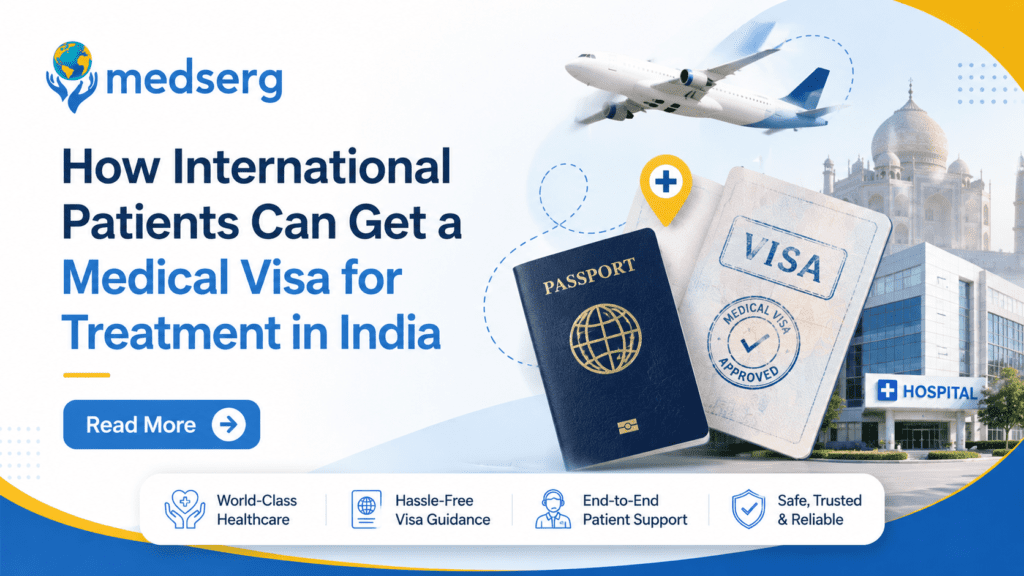
A Medical Visa is issued to international patients who want to travel to India for medical treatment at a recognized hospital or medical centre.
Patients usually apply for a medical visa for treatments such as:
| Treatment Category | Common Treatments |
|---|---|
| Cancer Care | Chemotherapy, surgery, radiation therapy |
| Heart Treatment | CABG, valve replacement, angioplasty |
| Organ Transplant | Kidney transplant, liver transplant |
| Orthopedics | Knee replacement, hip replacement, spine surgery |
| Neurology | Brain tumor, spine treatment, gamma knife |
| Fertility Treatment | IVF, ICSI, egg donation |
| Gastro & General Surgery | Colectomy, bariatric surgery, robotic surgery |
A family member or caregiver can also travel with the patient on a Medical Attendant Visa.
Who Can Apply for a Medical Visa?
You can apply for a medical visa if you are travelling to India for medical treatment at a recognized hospital or treatment centre.
Usually, patients apply after they have received a doctor’s opinion or treatment confirmation from India.
| Requirement | Why It Matters |
|---|---|
| Medical reports | Shows the patient’s diagnosis and treatment need |
| Doctor opinion | Helps confirm the recommended treatment |
| Hospital invitation letter | Supports the visa application |
| Treatment estimate | Helps with financial planning |
| Valid passport | Required for visa and travel |
Step-by-Step Process for Medical Visa
Step 1: Share Your Medical Reports
The first step is to share your latest medical reports with the hospital or medical travel team. These may include blood reports, scans, biopsy reports, discharge summary, prescriptions, or previous treatment records.
Step 2: Get a Doctor Opinion
After reviewing the reports, the doctor will suggest the possible treatment plan. This helps the patient understand the treatment, hospital stay, estimated cost, and recovery time.
Step 3: Receive Hospital Invitation Letter
Once the patient decides to travel, the hospital provides an invitation letter. This letter confirms that the patient is coming to India for medical treatment and is an important document for the visa application.
Step 4: Apply for Medical Visa
The patient can apply for a Medical Visa through the Indian Embassy, Consulate, or official online visa portal, depending on their country.
Step 5: Apply for Medical Attendant Visa
If a family member is travelling with the patient, they can apply for a Medical Attendant Visa. This visa is usually for close family members or caregivers who will support the patient during treatment.
Step 6: Book Travel After Visa Approval
Once the visa is approved, patients can book flight tickets and confirm hospital appointments, airport pickup, accommodation, and other travel support.
Documents Required for Medical Visa
| Document | Patient | Attendant |
|---|---|---|
| Valid passport | Yes | Yes |
| Passport-size photo | Yes | Yes |
| Medical reports | Yes | No |
| Hospital invitation letter | Yes | Sometimes required |
| Treatment estimate | Recommended | No |
| Visa application form | Yes | Yes |
| Flight details | Recommended | Recommended |
| Proof of relationship | No | Recommended |
Things to Check Before Applying for a Medical Visa
Before applying for a medical visa, patients should make sure their treatment plan and documents are clear. This helps avoid delays in visa approval and travel planning.
| Things to Check | Why It Is Important |
|---|---|
| Updated medical reports | Helps doctors understand the current condition |
| Hospital confirmation | Shows that treatment is planned in India |
| Correct passport details | Avoids mistakes in visa application |
| Attendant details | Needed if a family member is travelling |
| Estimated treatment cost | Helps with financial planning |
| Expected stay in India | Helps plan visa duration and accommodation |
Medical Visa vs Medical Attendant Visa
| Visa Type | Who Should Apply | Purpose |
|---|---|---|
| Medical Visa | Patient | For treatment in India |
| Medical Attendant Visa | Family member or caregiver | To support the patient during treatment |
The Medical Attendant Visa is connected with the patient’s medical travel purpose. It allows the attendant to stay with the patient during consultation, surgery, recovery, and follow-up appointments.
How Medserg Supports International Patients
For many patients, the visa process becomes easier when everything is planned properly from the beginning.
Medserg helps international patients with:
| Support | How It Helps |
|---|---|
| Doctor opinion | Get treatment advice from experienced specialists |
| Hospital selection | Choose the right hospital based on treatment need |
| Cost estimate | Understand expected treatment cost before travel |
| Invitation letter support | Helps with medical visa application |
| Appointment booking | Saves waiting time after arrival |
| Airport and stay assistance | Makes travel smoother for patient and attendant |
| Treatment coordination | Support during hospital visits and follow-ups |
Patients travelling from Mauritius, Kenya, Fiji, Ghana, Nigeria, Bangladesh, Dubai, the United States, and many other countries can connect with Medserg before planning their treatment journey to India.