






















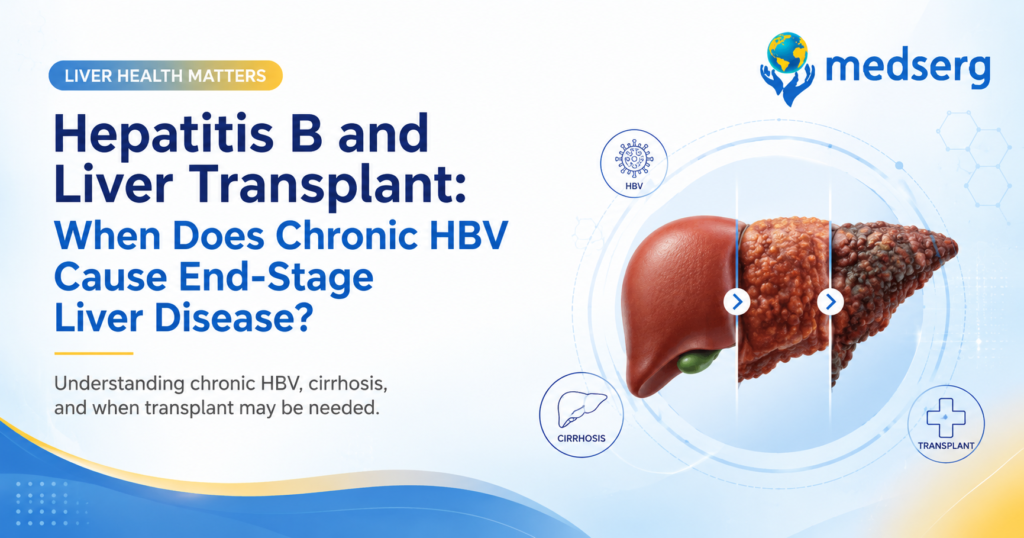
Hepatitis B is a viral infection that attacks the liver. While some people clear the infection naturally, others develop chronic hepatitis B, meaning the hepatitis B virus remains in the body for more than six months. Without appropriate monitoring and treatment, chronic HBV infection can gradually cause liver inflammation, fibrosis, cirrhosis and, eventually, end-stage liver disease.
The World Health Organization estimates that hepatitis B caused approximately 1.1 million deaths in 2024, mainly due to cirrhosis and hepatocellular carcinoma, or primary liver cancer.
How Does Chronic Hepatitis B Damage the Liver?
The hepatitis B virus does not usually destroy liver cells directly. Instead, the immune system’s continued attempt to eliminate infected cells causes long-term inflammation. Repeated inflammation and healing can produce scar tissue, known as fibrosis.
Over several years, severe fibrosis may progress to cirrhosis. In advanced cirrhosis, healthy liver tissue is replaced by extensive scarring, making it difficult for the liver to process nutrients, remove toxins, produce proteins and regulate blood clotting.
| Stage | What Happens in the Liver | Possible Symptoms |
|---|---|---|
| Chronic HBV infection | The virus remains present in the body | Often no symptoms |
| Active hepatitis | Ongoing inflammation damages liver cells | Fatigue, nausea or abdominal discomfort |
| Fibrosis | Scar tissue begins developing | Usually few noticeable symptoms |
| Compensated cirrhosis | Significant scarring, but the liver still functions | Weakness, reduced appetite |
| Decompensated cirrhosis | The liver can no longer perform essential functions | Jaundice, ascites, bleeding or confusion |
| End-stage liver disease | Severe, irreversible liver failure | Multiple serious complications |
Which Factors Increase the Risk?
Not every person with chronic hepatitis B develops liver failure. Progression is more likely with a persistently high HBV viral load, elevated liver enzymes, hepatitis D or C co-infection, alcohol consumption, fatty liver disease, diabetes, obesity, older age and a family history of cirrhosis or liver cancer.
Patients may remain symptom-free even while liver damage is progressing. Regular testing is therefore essential.
| Important Test | What It Helps Assess |
|---|---|
| HBV DNA test | Amount of hepatitis B virus in the blood |
| ALT and AST | Ongoing liver inflammation |
| Bilirubin and albumin | How effectively the liver is functioning |
| INR | Ability of the blood to clot |
| Ultrasound or FibroScan | Liver scarring, cirrhosis and suspicious growths |
| AFP test | May support liver cancer surveillance |
| MELD score | Severity of advanced liver disease |
When Is a Liver Transplant Considered?
Antiviral medicines can suppress HBV replication, reduce inflammation and slow further liver damage. However, medication cannot always reverse advanced cirrhosis.
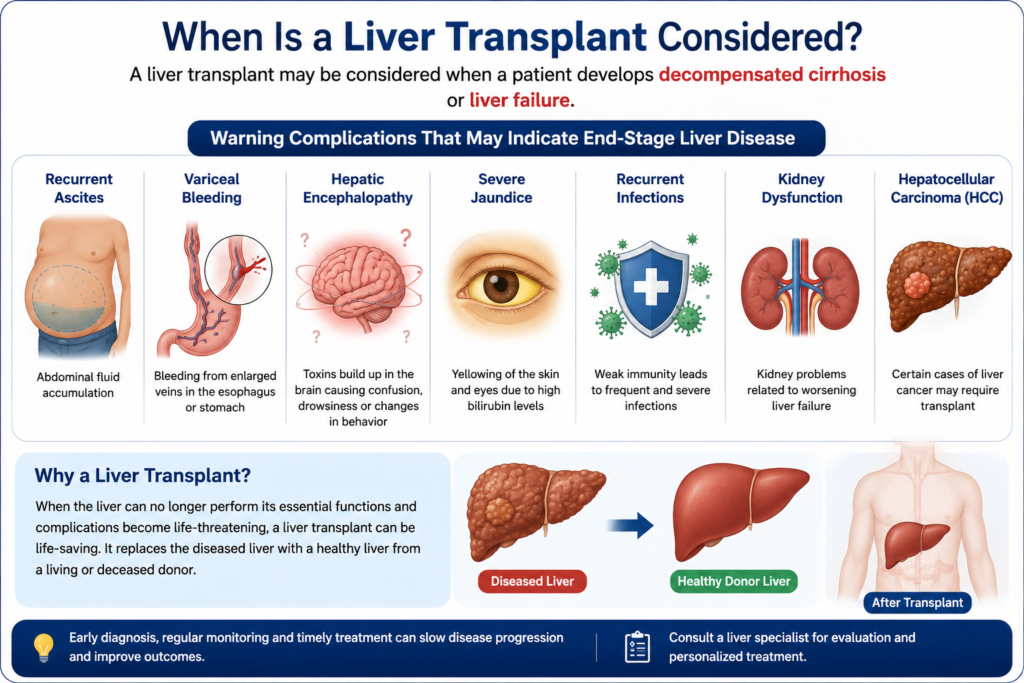
A liver transplant may be considered when a patient develops decompensated cirrhosis or liver failure. Warning complications include:
- Recurrent ascites or abdominal fluid accumulation
- Variceal bleeding from enlarged veins
- Hepatic encephalopathy causing confusion or drowsiness
- Severe jaundice
- Recurrent infections
- Kidney dysfunction associated with liver failure
- Selected cases of hepatocellular carcinoma
AASLD recommends referring patients with decompensated cirrhosis or liver cancer for specialist assessment and possible liver transplant evaluation. A liver transplant replaces the severely damaged liver with a healthy liver from a living or deceased donor and can be life-saving when liver failure is irreversible.
Can Hepatitis B Return After Transplantation?
HBV recurrence can usually be controlled through carefully planned antiviral treatment. Patients commonly require potent antiviral medication before and after transplantation. Some may also receive hepatitis B immune globulin, depending on their viral status and the transplant centre’s protocol.
Following transplantation, lifelong monitoring and anti-rejection medicines are required.
Chronic hepatitis B does not automatically lead to a liver transplant. Early diagnosis, regular HBV DNA testing, liver-function monitoring, antiviral therapy and liver cancer surveillance can significantly reduce complications. Patients experiencing jaundice, abdominal swelling, vomiting blood, black stools, severe weakness or confusion should seek urgent medical attention.
Medserg assists international patients in connecting with experienced hepatologists and liver transplant teams at leading hospitals in India for evaluation, treatment planning and transplant-related support.