





















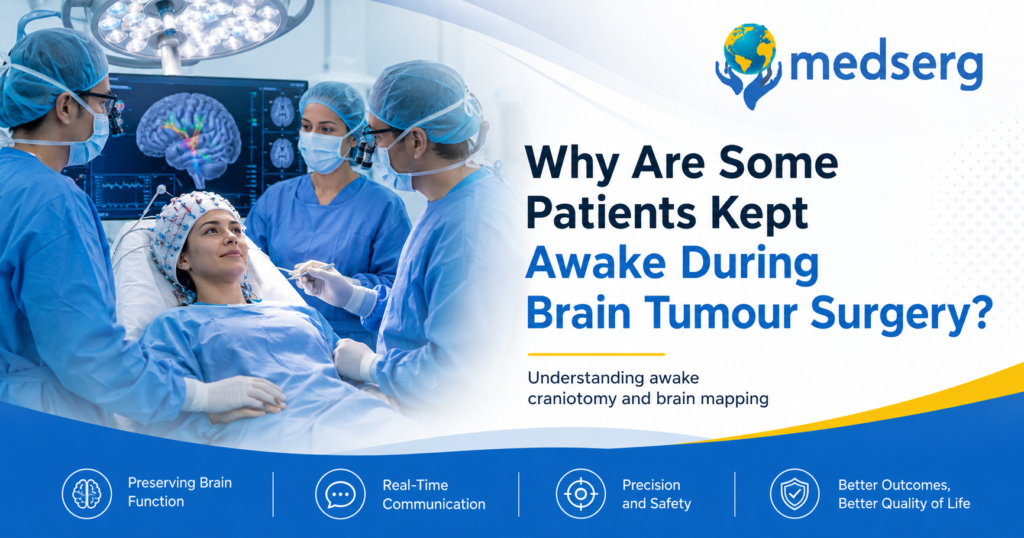
The idea of being awake during brain surgery can sound frightening. However, in certain brain tumour operations, keeping the patient awake for part of the procedure is a carefully planned safety measure—not an emergency or a sign that anaesthesia has failed.
This procedure is known as an awake craniotomy. It is generally considered when a tumour is located close to areas of the brain responsible for essential abilities such as speech, movement, vision, sensation or understanding language. By interacting with the patient during surgery, the medical team can monitor these functions in real time and reduce the risk of damaging healthy brain tissue.
Why Does the Patient Need to Be Awake?
Brain scans help neurosurgeons estimate where important functional areas are located. However, the exact position of these areas can vary from one person to another.
During an awake craniotomy, the surgeon may gently stimulate small areas around the tumour while the patient performs simple activities. This process, called brain mapping, helps identify which tissue can be safely removed and which areas must be protected.
| Patient may be asked to | Function being monitored |
|---|---|
| Name pictures or objects | Speech and language |
| Count or answer questions | Understanding and memory |
| Move a hand, arm or leg | Motor control |
| Describe sensations | Sensory function |
| Read words or complete sentences | Language processing |
| Look at images or follow instructions | Vision and awareness |
The patient’s responses provide immediate feedback. For example, if speaking suddenly becomes difficult when a particular area is stimulated, the surgeon knows that the area may be essential for language and should be avoided.
Does the Patient Feel Pain?
Patients are not simply left fully conscious throughout the entire operation. Depending on the surgical plan, they may be asleep during the opening and closing stages and gently awakened during tumour removal.
Local anaesthesia is used to numb the scalp, while carefully controlled medicines help keep the patient calm and comfortable. The brain tissue itself does not feel pain in the same way as the skin. An anaesthetist remains present throughout the procedure to monitor breathing, blood pressure, comfort and alertness.
Who May Be Suitable for Awake Brain Surgery?
An awake craniotomy is not required—or suitable—for every patient. It may be considered when:
- The tumour is close to speech, movement, vision or sensory areas.
- Removing more of the tumour could improve the treatment outcome.
- The patient can remain calm and communicate during the procedure.
- The neurosurgical and anaesthesia teams believe it can be performed safely.
Before surgery, patients usually undergo detailed assessments and may practise the questions or activities they will perform in the operating theatre.
How Medserg Supports Brain Tumour Patients
Choosing the right neurosurgeon and hospital is especially important when a brain tumour is located near critical areas. Medserg connects international patients with experienced neurosurgeons and advanced hospitals in India offering brain mapping, awake craniotomy and complex brain tumour surgery in India
From reviewing medical reports and arranging specialist consultations to hospital coordination, travel assistance and post-treatment follow-up, Medserg supports patients throughout their treatment journey.
An awake craniotomy may sound intimidating, but its purpose is reassuring: to help surgeons remove the tumour as safely as possible while protecting the abilities that shape a patient’s everyday life.