






















What exactly is Chronic Kidney Disease (CKD)?
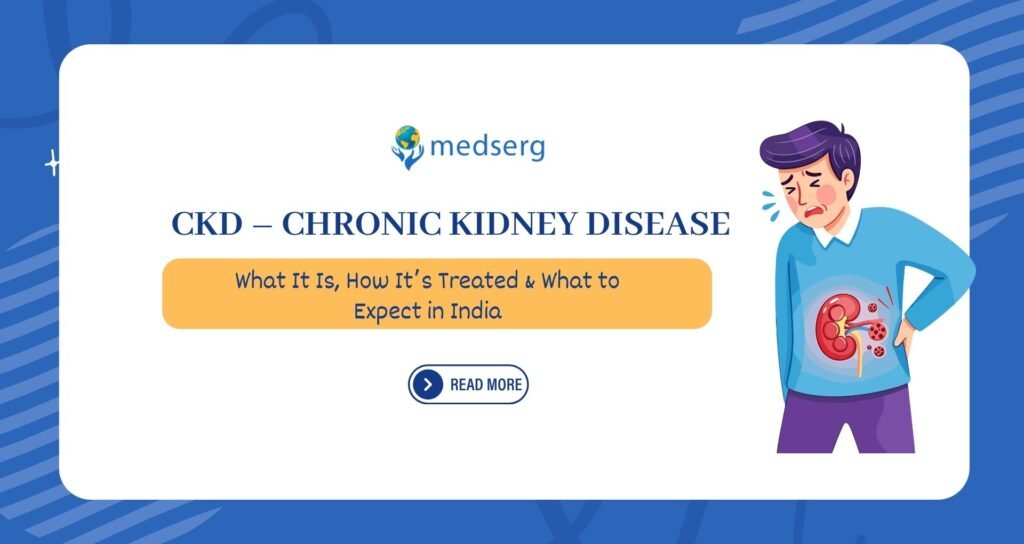
Chronic Kidney Disease (CKD) is a long-term condition where the kidneys gradually lose their ability to filter waste, toxins, and excess fluids from the blood. Unlike sudden kidney failure, CKD develops slowly over months or years and often goes unnoticed in its early stages. Diabetes and high blood pressure are the two most common causes worldwide.
Why are kidneys so important in the body?
Your kidneys regulate fluid balance, remove toxins, control blood pressure, support bone health, and help produce red blood cells. When kidney function declines, these systems are affected, leading to fatigue, swelling, anemia, weak bones, and cardiovascular risks.
How does CKD progress over time?
CKD progresses in stages based on kidney filtration capacity (GFR). Understanding the stage helps doctors decide the right treatment approach.
| CKD Stage | Kidney Function | What It Means for the Patient |
|---|---|---|
| Stage 1 | Near normal | Kidney damage with minimal symptoms |
| Stage 2 | Mild loss | Early functional decline |
| Stage 3 | Moderate loss | Fatigue, swelling, BP issues may start |
| Stage 4 | Severe loss | Preparation for dialysis or transplant |
| Stage 5 | Kidney failure | Dialysis or transplant required |
What symptoms should raise concern?
Early CKD often has no visible symptoms. As the disease advances, patients may notice:
- Persistent tiredness
- Swelling in feet, ankles, or face
- Changes in urine output or color
- Loss of appetite and nausea
- Shortness of breath
- Poor blood pressure control
These signs indicate the need for immediate nephrology evaluation.
How is CKD treated in India?
CKD treatment is stage-based and focuses on slowing disease progression, managing complications, and replacing kidney function when required.
What happens in early-stage CKD treatment?
In Stage 1–3 CKD, treatment usually includes:
- Strict blood pressure and diabetes control
- Kidney-friendly diet with sodium and protein regulation
- Medications for anemia, bone health, and fluid balance
- Regular monitoring of kidney function
Early treatment can significantly delay the need for dialysis.
When does dialysis become necessary?
Dialysis is recommended when kidneys can no longer remove waste effectively, typically in Stage 4 or 5 CKD.
Types of Dialysis:
- Hemodialysis – Blood is filtered through a dialysis machine
- Peritoneal Dialysis – The abdominal lining filters blood using dialysis fluid
The choice depends on medical condition, lifestyle, and doctor recommendation.
Is kidney transplant the final treatment for CKD?
For patients with end-stage kidney disease (Stage 5), a kidney transplant offers the best long-term outcome. It can restore near-normal kidney function, reduce dependency on dialysis, and improve quality of life. India has well-established transplant programs with experienced teams and structured post-transplant care.
How much does CKD treatment cost in India (USD)?
India offers advanced kidney care at significantly lower costs compared to many countries.
| Treatment | Estimated Cost (USD) |
|---|---|
| CKD medical management (annual) | $800 – $1,500 |
| Hemodialysis (per session) | $30 – $50 |
| Peritoneal dialysis (monthly) | $800 – $1,200 |
| Kidney transplant surgery | $11,000 – $18,000 |
| Post-transplant medicines (annual) | $2,000 – $3,000 |
Actual costs vary based on hospital, city, and patient condition.
Which hospitals in India treat CKD patients?
India has multiple internationally accredited hospitals offering complete kidney care, including advanced dialysis units and high-volume transplant centers. These hospitals are supported by senior nephrologists, urologists, and transplant surgeons with global exposure.
How does the CKD treatment process work with Medserg?
Medserg supports patients through every stage of CKD care in India:
- Medical Review – Evaluation of reports by experienced kidney specialists
- Treatment Planning – Personalized plan with transparent cost estimates
- Hospital & Doctor Selection – Matching patients with the right care team
- Travel & Admission Support – Assistance with visa, stay, and logistics
- Treatment & Follow-up – Continuous coordination during and after treatment
Why do international patients choose India for CKD treatment?
- Access to experienced nephrology and transplant teams
- Advanced dialysis and surgical infrastructure
- International patient-focused care systems
- Treatment costs up to 60% lower than many Western countries
- End-to-end coordination for medical and non-medical needs